Information Age
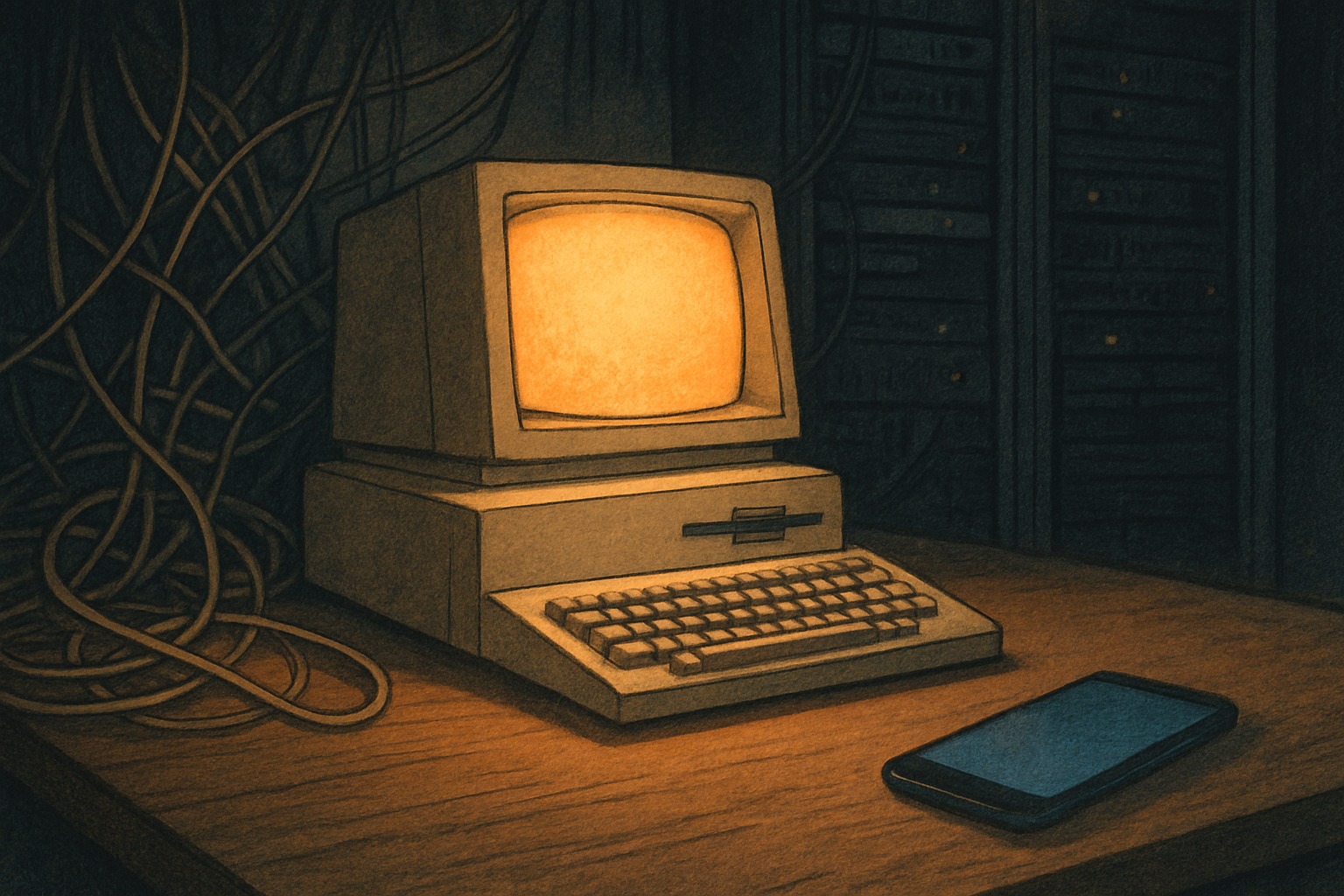
The Information Age grew out of a single invention — the transistor, developed at Bell Labs in 1947 — and the steady miniaturization that followed it. The integrated circuit and then Intel's 1971 microprocessor put computing power that had once filled a room onto a fingernail-sized chip. The decisive shift came in the mid-1970s, when that power left the institutions and reached the public: the Altair 8800 appeared in 1975, Microsoft was founded the same year to write software for it, Apple followed in 1976, and the IBM PC of 1981 made the personal computer a standard fixture of American offices and homes.
If the personal computer put a machine on every desk, the network connected them. Research projects like ARPANET matured into the internet, and in 1989–1991 the British scientist Tim Berners-Lee invented the World Wide Web, a system of linked pages that made the network usable by anyone. The 1994 release of the Netscape browser opened the web to a mass audience and set off the dot-com boom, a frenzy of investment that crashed in 2000–2001 but left behind the infrastructure and habits of online commerce, communication, and search that reshaped nearly every American industry.
The early twenty-first century moved computing off the desk and into the pocket. Google, founded in 1998, organized the explosion of online information; broadband replaced dial-up; and Apple's 2007 iPhone fused the phone, the camera, and the web into a single device carried by most Americans within a decade. Social platforms such as Facebook, launched in 2004, rewired how people met, argued, organized, and consumed news. By the 2010s a handful of technology companies ranked among the most valuable enterprises on earth, and the data they gathered became a resource — and a subject of growing public concern.
Whether the Information Age deserves to stand beside the Industrial Revolution as a true epoch is still debated, and so is its balance sheet. Its defenders point to vast gains in access, productivity, and connection; its critics point to eroded privacy, concentrated corporate power, addictive design, and the role of social media in deepening political polarization and spreading misinformation. The rapid arrival of consumer artificial intelligence in the 2020s suggests the era is not closing but entering a new phase — one whose consequences, like those of the personal computer in 1975, are easier to feel than to forecast.

| Period | c. 1975 – present |
| Transistor invented | 1947 (Bell Labs) |
| Intel microprocessor | 1971 |
| Microsoft founded | 1975 |
| Apple founded | 1976 |
| World Wide Web | 1989–1991 |
| Google founded | 1998 |
| iPhone released | 2007 |
| Date | c. 1975 – present |
| Location | United States |