The Automobile
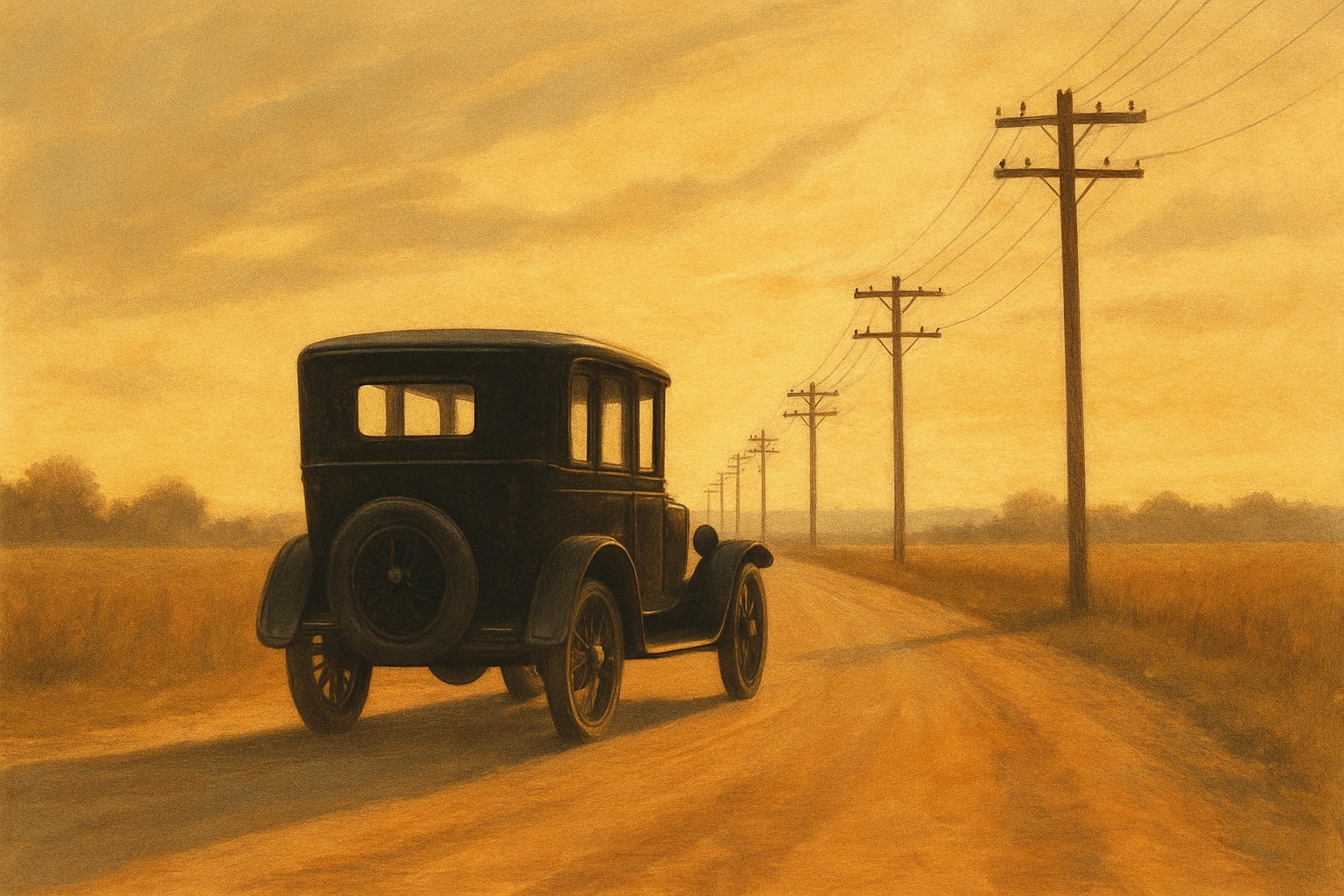
No invention reshaped twentieth-century America more thoroughly than the automobile. In a few decades the car went from a rich man's novelty to a possession of ordinary families, and in doing so it remade the economy, the landscape, and the daily rhythms of American life.
The transformation began with mass production. Henry Ford's moving assembly line made the Model T cheap enough for working people, and an entire industry rose around it — automakers, steel and rubber and glass suppliers, oil companies, dealerships, and repair shops. By mid-century the auto industry was the largest in the country and Detroit its capital.
The car then reshaped the country physically. It scattered Americans into sprawling suburbs, gave rise to highways and gas stations and motels and drive-ins, and made personal mobility a defining feature of American freedom. The Interstate Highway System knit the nation together with concrete.
That freedom came with costs that grew clearer over time — traffic, dependence on oil, air pollution, and the decline of the cities and rail systems the car displaced. But for better and worse, the automobile became inseparable from the American way of life, the machine on which the country built itself.
| Mass Era | Began with Ford's Model T and assembly line |
| Industry | The largest in mid-century America; centered on Detroit |
| Reshaped | Suburbs, highways, gas stations, and daily mobility |
| Costs | Traffic, oil dependence, pollution, urban decline |
| Date | From the Model T to the interstate age |