General Motors
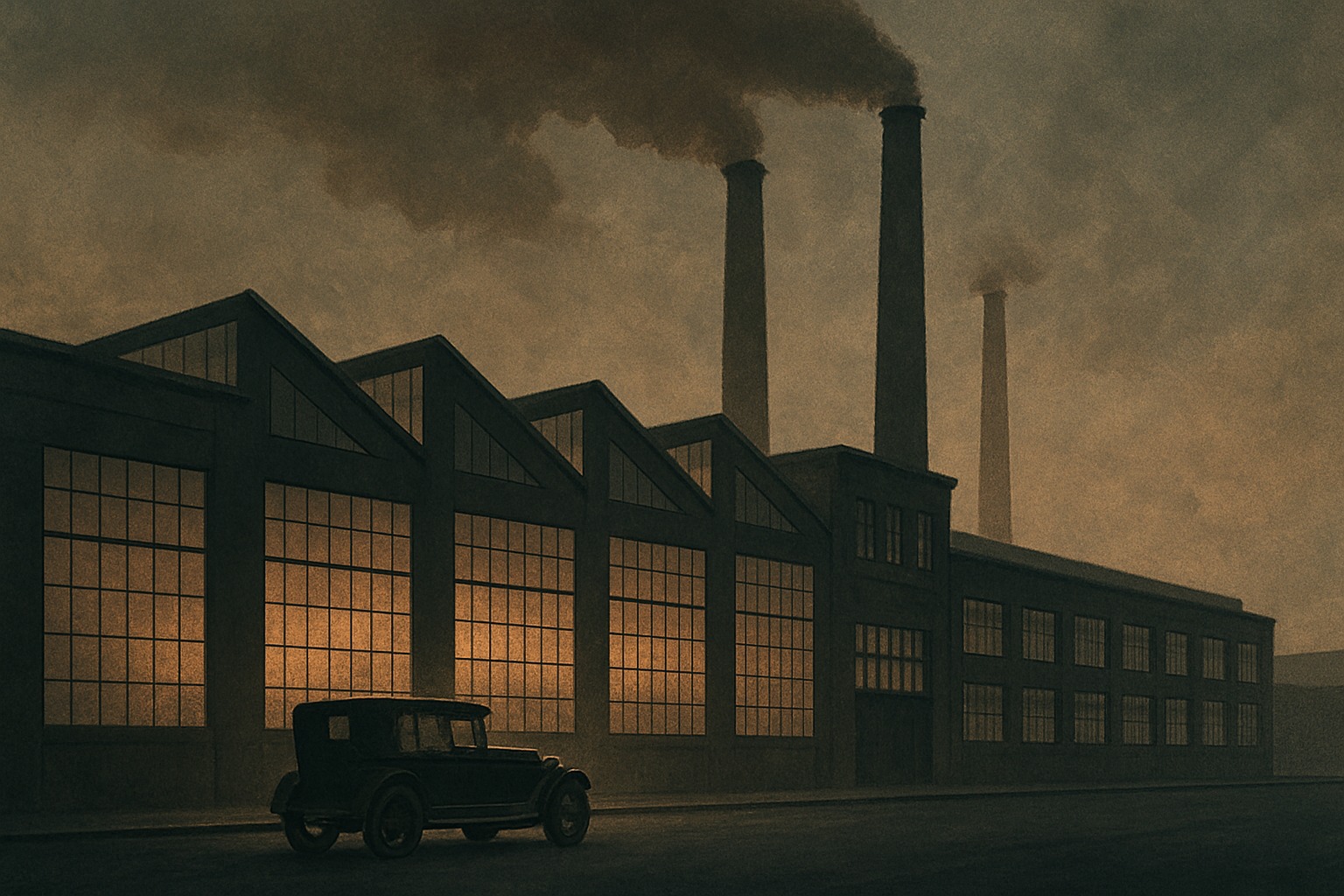
General Motors, founded in 1908, grew into the largest automaker in the world and for decades the largest industrial corporation in America. If Ford invented the mass-produced car, GM perfected the mass-market car business — and overtook Ford to dominate the industry.
Its rise was a triumph of management. Under Alfred P. Sloan in the 1920s, GM organized itself into separate divisions — Chevrolet, Pontiac, Oldsmobile, Buick, Cadillac — offering "a car for every purse and purpose" and introducing annual model changes to keep buyers coming back. This corporate structure became a model studied around the world.
GM's scale made it a bellwether of the American economy; "what's good for General Motors is good for the country," a GM president famously suggested. It was also a central battleground of the labor movement, where the 1936–37 Flint sit-down strike won recognition for the United Auto Workers.
In 2009, battered by foreign competition and the financial crisis, GM went bankrupt and was rescued by a federal bailout — a stunning fall for a company that had symbolized American industrial might. It survived, restructured, a reminder of both the heights and the vulnerabilities of the auto age.
| Founded | 1908 |
| Strategy | Sloan's divisions: "a car for every purse and purpose" |
| Divisions | Chevrolet, Pontiac, Oldsmobile, Buick, Cadillac |
| Labor | Flint sit-down strike won UAW recognition, 1936–37 |
| 2009 | Bankruptcy and federal bailout |
| Date | Founded 1908 |